Nutrition While Taking GLP-1 Medications: A Complete Guide to Eating Well
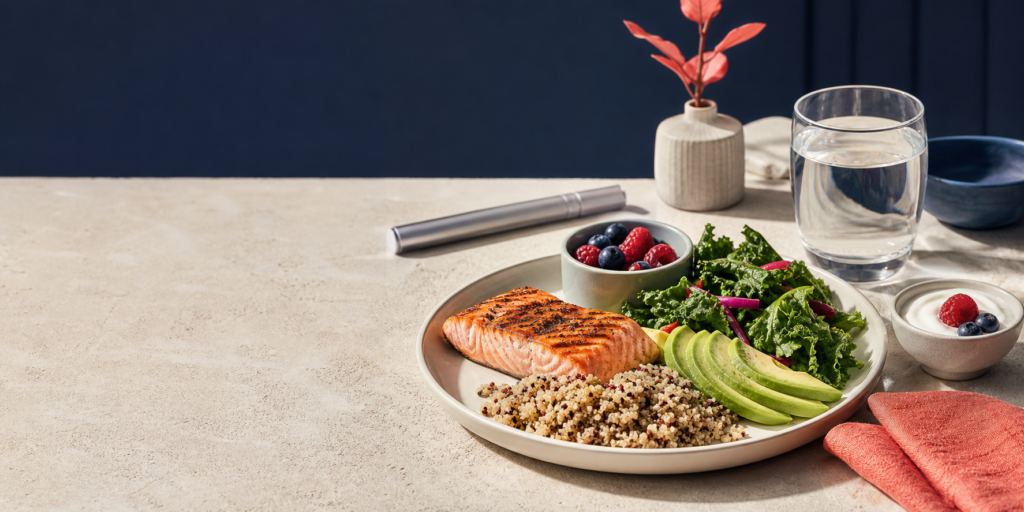
When a GLP-1 medication reduces appetite, eating less is only part of the picture. The quality, timing, and balance of what you eat become especially important for supporting energy, hydration, digestion, and muscle during weight loss.
Key takeaways
- Reduced appetite makes food quality and meal planning more important.
- Start meals with a protein source, then add produce, a tolerated high-fiber carbohydrate, and healthy fat.
- Small meals, slow eating, and stopping at comfortable fullness may be easier to tolerate than large portions.
- Increase fiber gradually and pair it with adequate fluids.
- Resistance exercise and adequate nutrition work together to support muscle during weight loss.
- Persistent vomiting, inability to keep fluids down, severe abdominal pain, or signs of dehydration need prompt medical attention.
GLP-1 receptor agonists and dual GIP/GLP-1 medicines can improve blood-sugar management and support substantial weight reduction for eligible people. They also commonly reduce appetite and may slow stomach emptying. That can make eating less feel natural—but it can also make it harder to consume enough protein, fluids, fiber, and micronutrients.
The goal is not to force large meals or follow one rigid “GLP-1 diet.” It is to build a smaller, more nutrient-dense eating pattern that fits your symptoms, medical needs, preferences, and treatment plan.
If you are new to these medicines, begin with our companion guide: GLP-1 Medications Explained: Benefits, Side Effects, and What to Expect.
Why nutrition matters during GLP-1 treatment
The American Diabetes Association’s 2026 Standards of Care recommend counseling and regular monitoring during intentional weight loss to help prevent protein insufficiency and micronutrient deficiencies. A 2025 joint advisory from four nutrition, lifestyle-medicine, and obesity organizations similarly emphasizes managing gastrointestinal side effects, maintaining nutritional adequacy, and supporting muscle and bone health.
When intake becomes too limited or poorly balanced, possible problems include:
- Low energy and reduced exercise performance
- Protein or micronutrient inadequacy
- Constipation or worsening digestive discomfort
- Dehydration
- Loss of lean mass during weight loss
Rather than simply trying to eat as little as possible, make the food you can comfortably eat count.
A simple GLP-1 meal-building formula
Most meals can be built from four flexible parts:
- Protein: poultry, fish, eggs, Greek yogurt, cottage cheese, tofu, tempeh, beans, lentils, or another tolerated source.
- Produce: vegetables or fruit that provide vitamins, minerals, and fiber.
- High-fiber carbohydrate: oats, beans, lentils, quinoa, brown rice, potatoes, or whole-grain bread, depending on tolerance and needs.
- Healthy fat: olive oil, avocado, nuts, seeds, or fatty fish in a portion that feels comfortable.
Not every meal must be perfect. The formula is a practical way to prevent small portions from becoming nutritionally empty.
Prioritize protein
Protein supports muscle, recovery, immune function, and satiety. Because fullness may arrive quickly, eating the protein portion first can help ensure it is not consistently left behind.
| Type | Practical options |
|---|---|
| Animal-based | Chicken, turkey, lean meat, fish, shrimp, eggs, Greek yogurt, cottage cheese |
| Plant-based | Lentils, beans, chickpeas, edamame, tofu, tempeh, soy foods, quinoa |
| Convenient | Protein smoothies, ready-to-drink protein beverages, higher-protein yogurt, prepared lean proteins |
There is no universal protein number for every GLP-1 user. Appropriate intake depends on body size, age, activity, goals, kidney function, pregnancy status, and other medical factors. Current reviews support adequate protein and resistance exercise as part of lean-mass preservation, while also noting that more research is needed to define one medication-specific target for everyone.
Use smaller meals and eat slowly
Large meals may feel uncomfortable when gastric emptying is slowed. Many people do better with three smaller meals and, when needed, one or two nutrient-dense snacks.
- Use smaller plates or serve a modest first portion.
- Take smaller bites and chew thoroughly.
- Pause during the meal and stop at comfortable fullness.
- Avoid trying to “make up” a low-intake day with one very large dinner.
If appetite is extremely low, a smaller liquid or soft protein option may be easier than a large solid meal. Drinks and shakes should complement a varied eating pattern rather than automatically replacing most meals.
Hydrate consistently
Reduced food intake, nausea, vomiting, diarrhea, hot weather, and exercise can all affect fluid balance. Drinking at predictable points—after waking, with or between meals, and around activity—is often easier than catching up at night.
- Keep one refillable bottle visible and track refills.
- Sip steadily if large amounts worsen fullness or nausea.
- Use urine color, thirst, heat, activity, and symptoms as practical feedback.
- Electrolyte drinks may be useful in specific situations, but they are not automatically necessary every day.
Do not ignore dehydration
Inability to keep fluids down, very limited urination, fainting, confusion, or rapidly worsening weakness needs prompt medical attention.
Increase fiber gradually
Fiber supports bowel regularity, gut bacteria, and cardiometabolic health. Useful sources include oats, beans, lentils, berries, pears, apples, broccoli, chia, and ground flaxseed.
More is not always better immediately. Adding a large amount of fiber too quickly—especially without enough fluid—can worsen bloating, gas, or constipation. Add one fiber-rich food at a time, increase gradually, and pay attention to bowel patterns and comfort.
Healthy fats still matter
Fat supports cell health, hormone production, and absorption of vitamins A, D, E, and K. Salmon, olive oil, avocado, nuts, and seeds can all fit. However, very large, greasy, or fried meals may worsen nausea or uncomfortable fullness for some people, so portion size and personal tolerance matter.
Watch for micronutrient gaps
Eating less food can mean consuming fewer vitamins and minerals. The nutrients at risk vary with the person’s diet, symptoms, medical history, and total intake. Vitamin D, calcium, vitamin B12, iron, folate, magnesium, potassium, zinc, and thiamine may be considered when a specific risk or symptom is present.
That does not mean everyone needs a large supplement stack. A food-first approach, targeted assessment, and appropriate laboratory testing are more useful than guessing. Supplements can also overlap or interact with medications.
Managing common digestive symptoms
For nausea
- Eat slowly and use smaller portions.
- Stop when comfortably full.
- Limit greasy meals and test personal triggers one at a time.
- Sip fluids throughout the day instead of drinking a large amount with one meal.
For constipation
- Increase fluids and fiber gradually.
- Walk or move regularly if it is safe and comfortable.
- Track bowel frequency, discomfort, medication changes, and new supplements.
For diarrhea
- Prioritize fluids and monitor for dehydration.
- Use simpler, tolerated foods temporarily.
- Seek care when symptoms are severe, persistent, bloody, or accompanied by significant weakness.
Current FDA labeling for semaglutide lists nausea, diarrhea, vomiting, constipation, abdominal pain, and other gastrointestinal effects among common adverse reactions, and advises contacting a healthcare professional for severe or persistent symptoms.
Nutrition and resistance exercise work together
Weight loss can include both fat and lean tissue. Recent systematic reviews show that lean-mass changes vary, but nutritional support and resistance exercise remain sensible strategies for protecting strength and function.
- Strength train consistently at an appropriate level.
- Distribute protein across meals instead of relying on dinner alone.
- Avoid extreme restriction that leaves too little energy for daily activity and recovery.
- Track strength, mobility, and energy—not only scale weight.
A practical one-day meal example
This example shows structure, not a prescription. Portions should be adjusted to appetite, goals, glucose management, symptoms, and individual needs.
| Meal | Example |
|---|---|
| Breakfast | Greek yogurt with berries, chia seeds, and a small portion of oats |
| Lunch | Grilled chicken or tofu with mixed vegetables and brown rice or quinoa |
| Snack | Cottage cheese with fruit, edamame, or a protein smoothie |
| Dinner | Salmon or lentils with roasted vegetables and a small potato or whole grain |
Common nutrition mistakes
- Skipping food for most of the day, then eating one large meal
- Leaving protein until last at every meal
- Drinking very little because thirst is also reduced
- Removing all carbohydrates or nearly all dietary fat
- Relying mainly on low-nutrient snack foods
- Adding multiple supplements without checking overlap
- Ignoring persistent vomiting, severe pain, or dehydration symptoms
Frequently asked questions
Do I need a special GLP-1 diet?
No single diet works for everyone. A useful foundation is adequate protein, regular fluids, nutrient-dense produce, tolerated high-fiber carbohydrates, healthy fats, and portions that fit your appetite and symptoms.
Should I eat when I am not hungry?
Do not force a large meal. A small protein-forward meal or snack may be more manageable. Persistent inability to eat enough, rapid unintended weight loss, or worsening weakness deserves individualized review.
Are protein shakes okay?
They can be a convenient option when appetite is low. Choose a product that fits your needs and use it to support—not automatically replace—a varied eating pattern.
Can I drink coffee?
Many people tolerate coffee, while others find caffeine worsens nausea, reflux, or digestive discomfort. Start with your usual or a smaller amount and use symptoms as feedback.
Should I avoid carbohydrates?
No. Beans, lentils, fruit, vegetables, oats, potatoes, and whole grains provide energy, fiber, and micronutrients. Type and portion should be individualized, especially when blood-sugar management is part of treatment.
The bottom line
Nutrition during GLP-1 treatment is not about eating as little as possible. It is about using a smaller appetite wisely: prioritize protein, stay hydrated, add fiber gradually, choose nutrient-dense foods, eat slowly, and support the plan with resistance exercise and regular monitoring.
References
- Mozaffarian D, et al. Nutritional Priorities to Support GLP-1 Therapy for Obesity: A Joint Advisory. 2025.
- American Diabetes Association Professional Practice Committee. Obesity and Weight Management for the Prevention and Treatment of Diabetes: Standards of Care in Diabetes—2026. Diabetes Care. 2026;49(Suppl 1):S166–S182.
- U.S. Food and Drug Administration. Wegovy (semaglutide) prescribing information. Revised 2026.
- Jobanputra R, et al. The Effects of GLP-1 Receptor Agonists on Lean Body Mass in Humans. Diabetes Metab Res Rev. 2026;42(5):e70194.
- Laverde LP, et al. Effect of GLP-1 receptor agonists at doses for obesity management on muscle health. 2026.
- Dietary Strategies and Nutritional Management in Patients Receiving GLP-1 and Dual GIP/GLP-1 Receptor Agonists. 2026.
Last reviewed: July 29, 2026
Medical disclaimer: This article is for general educational purposes only. It is not medical advice and is not intended to diagnose, treat, cure, or prevent disease. Nutrition and medication decisions should be individualized with a qualified healthcare professional who understands your medical history and treatment.