Managing Nausea, Constipation, and Other GLP-1 Side Effects
Nausea, constipation, diarrhea, vomiting, reflux, bloating, and abdominal discomfort are among the most common side effects of GLP-1–based medications. Mild symptoms may improve with practical adjustments, but severe or persistent symptoms should never be dismissed as something you simply have to endure.
Key takeaways
- Digestive symptoms are often most noticeable when treatment begins or the dose increases.
- Smaller meals, slower eating, regular fluids, and avoiding personal food triggers may improve tolerability.
- Increase fiber gradually and pair it with adequate fluid.
- Do not change, skip, double, or accelerate a prescribed dose without instructions from the prescriber.
- Repeated vomiting, inability to keep fluids down, severe abdominal pain, or signs of dehydration require prompt medical attention.
- Some symptoms can signal pancreatitis, gallbladder disease, bowel obstruction, allergic reaction, or another urgent problem rather than a routine side effect.
Get urgent help for serious symptoms
Seek urgent medical evaluation for severe or persistent abdominal pain, pain that radiates to the back, repeated vomiting, inability to keep fluids down, fainting or confusion, very limited urination, difficulty breathing, swelling of the face or throat, yellow skin or eyes, blood in vomit or stool, a severely swollen abdomen, or inability to pass stool or gas.
GLP-1 receptor agonists and dual GIP/GLP-1 medications can help eligible people manage type 2 diabetes, obesity, and related health risks. Their digestive effects are also well documented. Current FDA prescribing information for semaglutide and tirzepatide products lists nausea, diarrhea, vomiting, constipation, abdominal pain, and indigestion among common adverse reactions.
For many people, symptoms are mild or temporary. For others, they interfere with eating, hydration, daily activities, or continued treatment. The safest approach is to recognize symptoms early, make reasonable adjustments, and communicate with the prescribing team when symptoms persist, worsen, or prevent normal eating and drinking.
Why GLP-1 medications can affect digestion
GLP-1–based medications influence appetite, fullness, blood-sugar regulation, and gastrointestinal movement. They can delay stomach emptying, so food may remain in the stomach longer. Tirzepatide activates both GIP and GLP-1 receptors, but gastrointestinal symptoms are also commonly reported with it.
These effects may contribute to:
- Feeling full after a small amount of food
- Nausea or an urge to vomit
- Bloating, belching, or pressure after eating
- Reflux or indigestion
- Constipation or diarrhea
- Abdominal discomfort
Symptoms do not affect everyone equally. Medication, dose, escalation speed, other medicines, meal size, food choices, hydration, and individual medical conditions can all influence tolerability.
When side effects are most likely
Digestive symptoms commonly appear:
- Shortly after treatment begins
- After a dose increase
- After an oversized or high-fat meal
- When eating quickly or past comfortable fullness
- When fluid intake becomes inadequate
Stepwise dose escalation is intended in part to improve tolerability. If symptoms become difficult after an increase, contact the prescriber rather than increasing the dose faster, improvising the schedule, or trying to tolerate severe symptoms.
Managing nausea
Nausea may feel like mild queasiness, reduced interest in food, uncomfortable fullness, or an urge to vomit. It may improve as the body adjusts, but persistent or severe nausea deserves attention.
Strategies that may help
- Serve a smaller first portion.
- Eat slowly and chew thoroughly.
- Stop at comfortable fullness rather than finishing automatically.
- Choose simpler, lower-fat foods while symptoms are active.
- Sip fluids gradually instead of drinking a large volume at once.
- Avoid lying down immediately after eating.
- Track foods that repeatedly trigger symptoms.
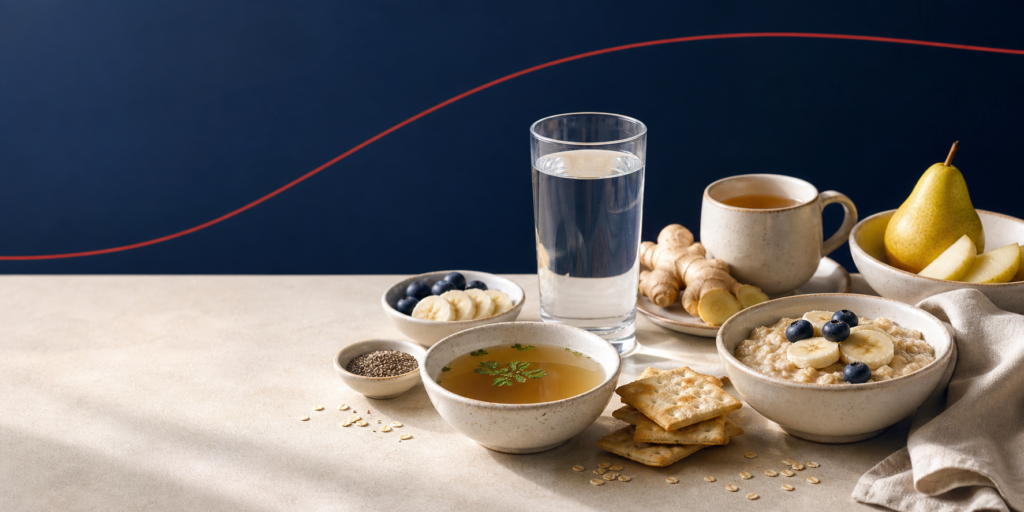
Some people tolerate toast, crackers, rice, oatmeal, bananas, applesauce, broth-based soup, yogurt, or small portions of lean protein more easily. These are options—not requirements—and tolerance varies.
Fried foods, greasy meals, rich sauces, very spicy foods, oversized portions, large amounts of alcohol, and rapid eating may worsen nausea for some people. A 2023 multidisciplinary consensus on GLP-1 gastrointestinal adverse events supports smaller meals, slow eating, stopping at satiety, and individualized food adjustments.
Vomiting and dehydration
Repeated vomiting can lead to dehydration, electrolyte imbalance, and kidney stress. FDA labeling warns that gastrointestinal reactions associated with dehydration may contribute to acute kidney injury.
Contact the prescribing team promptly if vomiting:
- Happens repeatedly or after most meals
- Prevents you from keeping fluids down
- Is accompanied by severe pain
- Causes dizziness, weakness, faintness, or reduced urination
After vomiting, small and frequent sips may be easier to tolerate than a large drink. Resume simple foods gradually as tolerated. Do not assume an anti-nausea medication is appropriate for you; the best option depends on medical history, other medicines, and the cause of the symptoms.
Managing constipation
Constipation may develop because food intake decreases, fluid intake drops, fiber changes, or digestive movement slows. Symptoms can include fewer bowel movements, hard or dry stool, straining, incomplete emptying, pressure, or bloating.
Strategies that may help
- Drink fluids regularly.
- Increase fiber gradually rather than all at once.
- Include tolerated fruits, vegetables, beans, lentils, oats, and whole grains.
- Remain physically active when appropriate.
- Use the bathroom when the urge appears rather than repeatedly delaying.
- Consider a consistent bathroom routine.
The National Institute of Diabetes and Digestive and Kidney Diseases recommends adequate fiber and liquids for constipation and advises adding fiber a little at a time. Pears, berries, apples with skin, prunes, oats, lentils, beans, broccoli, chia seeds, and ground flaxseed are examples. Fiber without enough fluid may worsen discomfort for some people.
Seek medical advice for constipation with severe or worsening pain, persistent vomiting, blood in the stool, fever, marked abdominal swelling, inability to pass stool or gas, or symptoms that do not improve. A healthcare professional may recommend a short-term over-the-counter option, a prescription treatment, or a change to another contributing medication.
Managing diarrhea
Diarrhea may occur after starting treatment or increasing a dose. Repeated loose stools can cause dehydration, weakness, dizziness, and electrolyte loss.
- Drink water regularly.
- Choose smaller meals and temporarily simpler foods.
- Avoid greasy foods, alcohol, and clear personal triggers.
- Ask whether electrolyte replacement is appropriate if fluid loss is significant.
People with kidney disease, heart disease, high blood pressure, or conditions affecting fluid balance should not automatically consume large quantities of electrolyte products. Seek care if diarrhea is severe, persistent, bloody, accompanied by fever, or causing dehydration.
Abdominal pain: routine discomfort or warning sign?
Mild discomfort may occur with gas, constipation, diarrhea, or delayed stomach emptying. Severe or persistent pain is different and requires evaluation.
Current FDA labeling includes warnings about acute pancreatitis and gallbladder disease. Promptly report:
- Severe pain that does not improve
- Pain that radiates to the back
- Pain with repeated vomiting
- Upper abdominal pain, especially with fever
- Yellow skin or eyes, dark urine, or pale stools
- Severe swelling or inability to pass stool or gas
Reflux, heartburn, and indigestion
Some people experience heartburn, burping, indigestion, pressure after eating, or food and acid coming back into the throat. Semaglutide and tirzepatide labeling includes dyspepsia, belching, abdominal distension, and gastroesophageal reflux among reported adverse reactions.
- Eat smaller meals.
- Avoid lying down soon after eating.
- Finish the final meal several hours before bed when practical.
- Identify and limit personal triggers.
- Avoid eating past fullness.
- Ask whether upper-body elevation during sleep is appropriate.
Possible triggers include high-fat foods, spicy foods, chocolate, caffeine, peppermint, tomato-based foods, and alcohol, but blanket restrictions are not necessary when a food causes no problem.
Bloating, gas, and belching
Slower digestion and swallowed air can contribute to bloating, pressure, and burping. Try reducing portion size, eating more slowly, chewing thoroughly, limiting carbonated drinks, and increasing fiber gradually. A short food-and-symptom journal can reveal patterns without forcing unnecessary restrictions.
When fullness makes it difficult to eat enough
Early fullness can support a lower calorie intake, but extreme fullness may make it difficult to consume enough protein, fluid, fiber, vitamins, minerals, and total energy.
Make smaller meals count:
- Begin with a protein source.
- Add vegetables or fruit.
- Include a tolerated high-fiber carbohydrate.
- Add healthy fat in a portion that feels comfortable.
- Avoid filling up mainly on low-nutrient snack foods.
Persistent inability to meet basic nutrition or hydration needs should be discussed with the prescriber or a registered dietitian. For a fuller eating plan, see Nutrition While Taking GLP-1 Medications: A Complete Guide to Eating Well.
Hydration during digestive symptoms
Possible signs of dehydration include dry mouth, dark urine, reduced urination, dizziness, weakness, headache, rapid heartbeat, and confusion. Some people tolerate small sips throughout the day better than large amounts at once.
Seek prompt medical attention if you cannot keep fluids down, are barely urinating, feel faint, or develop confusion. Do not wait for a routine appointment when hydration is becoming difficult.
Should you skip or reduce a dose?
Do not independently skip, double, reduce, increase, or reschedule a dose. Instructions differ across products and clinical situations.
Depending on symptom severity and timing, a prescriber may decide to delay an increase, keep a lower dose longer, reduce the dose, temporarily pause treatment, investigate another cause, switch medication, or use symptom-specific treatment. The correct response depends on the exact medicine and the individual.
Low blood sugar and other medications
GLP-1 medications generally have a lower risk of hypoglycemia when used alone, but the risk can increase when combined with insulin or an insulin secretagogue such as a sulfonylurea. Shaking, sweating, hunger, dizziness, confusion, weakness, and a rapid heartbeat can be signs of low blood sugar. People taking multiple glucose-lowering medicines may require closer monitoring and medication adjustment.
Surgery, anesthesia, and delayed stomach emptying
FDA labeling advises people taking GLP-1–based medications to tell healthcare professionals before planned surgery or procedures involving general anesthesia or deep sedation. Rare postmarketing reports describe pulmonary aspiration despite reported adherence to fasting instructions.
Follow the procedure-specific instructions from the surgeon, anesthesiologist, and prescribing team. Do not decide on your own when to stop or restart the medication.
Common mistakes
- Eating through fullness: this can worsen nausea, reflux, and discomfort.
- Drinking too little: reduced fluid intake can worsen constipation and dehydration.
- Adding large amounts of fiber suddenly: this may increase gas and cramping.
- Relying on fried or heavy foods: large, high-fat meals may be harder to tolerate.
- Changing the dose without instructions: escalation schedules are product-specific.
- Ignoring persistent symptoms: ongoing vomiting, severe constipation, or worsening pain requires evaluation.
A practical symptom-conscious day
| Time | Practical approach |
|---|---|
| Morning | Begin with water or another appropriate beverage. Choose a small protein-containing breakfast and eat without rushing. |
| Midday | Serve a modest portion, begin with protein, add tolerated produce or fiber, and stop at comfortable fullness. |
| Afternoon | Continue sipping fluids. Add a small snack if needed. Take a brief walk if appropriate. |
| Evening | Avoid an oversized dinner, eat slowly, and remain upright after the meal. Note foods that repeatedly trigger symptoms. |
This is a general example, not a prescription. Adapt it to appetite, glucose targets, medical needs, and individual tolerance.
Frequently asked questions
Do GLP-1 side effects eventually go away?
For many people, gastrointestinal symptoms decrease as the body adjusts. Symptoms can reappear or intensify after a dose increase. Persistent, worsening, or severe symptoms should be discussed with the prescriber.
Is nausea a sign that the medication is working?
No. Nausea is a side effect, not a requirement for treatment success. A person does not need to feel sick for the medication to be effective.
Can I take a laxative for constipation?
Some over-the-counter products may be appropriate, but the best choice depends on medical conditions, other medicines, and symptom severity. Ask a healthcare professional before beginning regular laxative use.
Should I drink electrolytes?
Electrolyte replacement may be useful after significant vomiting or diarrhea, but it is not automatically necessary for everyone. People with kidney, heart, blood-pressure, or fluid-balance conditions need individualized advice.
Can I avoid symptoms by taking the injection with food?
Administration instructions differ by medication and formulation. Follow the exact directions for the prescribed product instead of changing timing based on general advice.
Does constipation mean I have an intestinal blockage?
Usually not. However, severe pain, vomiting, marked abdominal swelling, or inability to pass stool or gas requires urgent medical evaluation.
The bottom line
Digestive side effects are common with GLP-1 and dual GIP/GLP-1 medications, but common does not mean they should be ignored. Mild symptoms may improve with smaller meals, slow eating, regular hydration, gradual fiber intake, and avoidance of personal trigger foods.
The goal is not to tolerate illness in order to lose weight. The goal is a safe, sustainable treatment plan that supports nutrition, hydration, daily function, and quality of life.
References
- U.S. Food and Drug Administration. Wegovy (semaglutide) prescribing information. Revised 2026.
- U.S. Food and Drug Administration. Zepbound (tirzepatide) prescribing information. Revised 2025.
- Gorgojo-Martínez JJ, et al. Clinical Recommendations to Manage Gastrointestinal Adverse Events in Patients Treated with GLP-1 Receptor Agonists: A Multidisciplinary Expert Consensus. J Clin Med. 2023;12(1):145.
- Balancing the benefits and risks of GLP-1 receptor agonists: a clinical guide for shared decision-making. 2026.
- National Institute of Diabetes and Digestive and Kidney Diseases. Eating, Diet, & Nutrition for Constipation.
- National Institute of Diabetes and Digestive and Kidney Diseases. Treatment for Constipation.
- Mozaffarian D, et al. Nutritional Priorities to Support GLP-1 Therapy for Obesity: A Joint Advisory. 2025.
Last reviewed: July 30, 2026
Medical disclaimer: This article is for general educational purposes only. It is not medical advice and is not intended to diagnose, treat, cure, or prevent disease. Medication decisions and treatment of side effects should be individualized with a qualified healthcare professional who understands your medical history.