Protein and Muscle Preservation During GLP-1 Weight Loss: Why It Matters
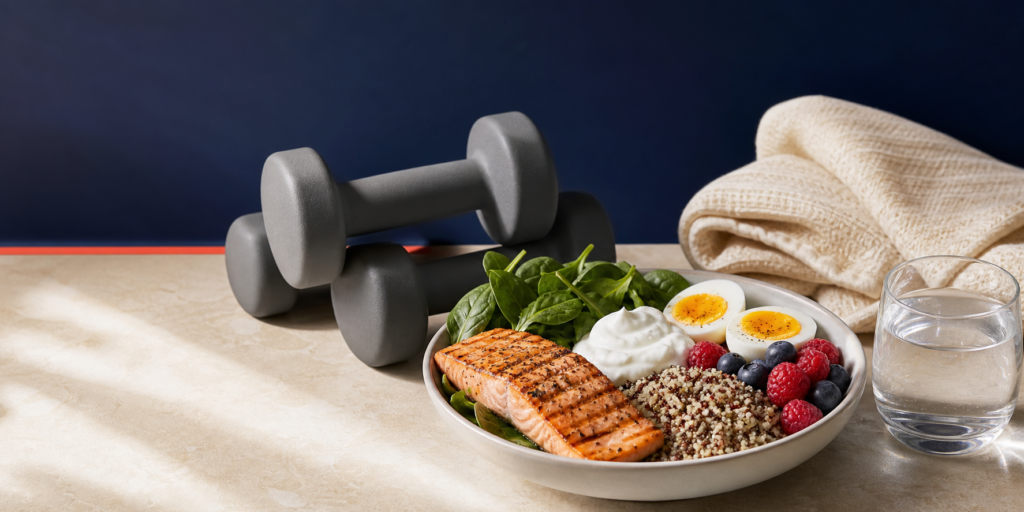
GLP-1 medications can support meaningful weight loss, but the number on the scale does not tell the whole story. Protecting strength and lean muscle is an important part of improving health, mobility, and body composition while losing weight.
Key takeaways
- Weight loss can include both body fat and lean tissue.
- Protein supplies the amino acids used to maintain and repair muscle.
- Resistance exercise provides the stimulus that tells muscle to stay strong.
- Protein and strength training work best together; neither replaces the other.
- Hydration, sleep, sufficient overall nutrition, and recovery also matter.
- Protein and exercise needs should be adjusted for age, health, ability, and treatment goals.
GLP-1 receptor agonists and related medicines often reduce appetite, which can make a calorie deficit easier to sustain. During any substantial weight loss, however, the body may lose some fat-free mass along with fat. Fat-free mass includes muscle, bone, organs, water, and other non-fat tissues, so a change in “lean mass” is not automatically the same thing as a change in skeletal muscle.
That distinction matters. Recent systematic reviews show that GLP-1–based treatment generally reduces substantially more fat mass than lean mass, while absolute lean mass may still decline. The percentage of body weight represented by lean mass can remain stable or improve even when the absolute amount decreases. This is why the goal is not to fear weight loss—it is to support muscle function and minimize avoidable losses through nutrition and activity.
For the broader eating plan, see our companion guide: Nutrition While Taking GLP-1 Medications: A Complete Guide to Eating Well.
Why muscle matters during weight loss
Skeletal muscle is the tissue that helps you walk, lift, climb stairs, maintain posture, protect joints, and perform everyday activities. It also supports glucose use and provides a reserve that becomes increasingly important during illness, recovery, and aging.
Healthy weight management therefore looks beyond total pounds lost. Useful outcomes also include:
- Maintaining or improving strength
- Preserving mobility and balance
- Reducing body fat while supporting lean tissue
- Keeping enough energy for daily life and exercise
- Building habits that can continue after active weight loss
A scale cannot separate fat, muscle, water, and other tissues. Waist measurements, clothing fit, progress photos, strength, walking ability, and—when clinically useful—body-composition measurements can provide additional context.
How GLP-1 weight loss can affect body composition
GLP-1 medications can reduce hunger and food intake. When energy intake falls, the body draws on stored energy. Most of the lost weight is typically fat, but some lean tissue can also be lost, as happens with many weight-loss approaches.
A 2025 systematic review and network meta-analysis of 22 randomized trials found reductions in total weight, fat mass, and lean mass with GLP-1 and dual GLP-1/GIP therapies. Lean mass accounted for roughly one-quarter of the weight change in that analysis, though results differ by medication, study, population, measurement method, and duration. A newer 2026 meta-analysis similarly found lower absolute lean mass alongside a higher proportion of body weight represented by lean mass.
Put the numbers in context
Lean-mass measurements are not identical to direct measurements of muscle. Hydration, glycogen, scanning method, and the amount of total weight lost can influence results. The most useful question is not simply “Did lean mass change?” but also “How are strength, function, nutrition, and overall body composition changing?”
Protein provides the building blocks
Protein supplies amino acids the body uses to build and repair tissue. During weight loss, adequate protein supports muscle maintenance, recovery, immune function, and satiety. Because fullness may arrive quickly on a GLP-1 medication, it can help to eat the protein portion of a meal first.
| Protein source | Practical options |
|---|---|
| Animal-based | Fish, chicken, turkey, lean meat, eggs, Greek yogurt, cottage cheese |
| Plant-based | Beans, lentils, chickpeas, edamame, tofu, tempeh, soy milk, quinoa |
| Low-appetite options | Greek yogurt, cottage cheese, eggs, soup with beans or lean protein, a balanced protein smoothie |
| Convenient options | Prepared lean proteins, tuna or salmon packets, higher-protein yogurt, ready-to-drink protein beverages |
Whole foods offer protein plus vitamins, minerals, fiber, and other nutrients. Protein shakes can be useful when appetite is low or a full meal is difficult, but they should usually supplement—not automatically replace—a varied eating pattern.
How much protein do you need?
There is no single protein target that fits every person taking a GLP-1 medication. Needs vary with age, body size, activity, training goals, total food intake, kidney function, pregnancy, and medical history.
Rather than copying a large number from social media, start with a practical pattern:
- Include a meaningful protein source at each meal.
- Spread protein across the day instead of relying on one very large dinner.
- Choose smaller, protein-forward meals when early fullness is a challenge.
- Track intake for a few typical days if you are unsure how much you are eating.
- Ask a registered dietitian or qualified clinician for an individualized target when medical conditions or ambitious training goals are involved.
A 2024 systematic review of adults with overweight or obesity found that enhanced protein intake can support muscle-mass retention during weight loss. More is not always better, and protein supplements are not required when food provides enough.
Resistance training provides the signal
Protein supplies the raw material; resistance exercise gives muscle a reason to maintain and adapt. Examples include:
- Weight machines
- Dumbbells or kettlebells
- Resistance bands
- Bodyweight squats, wall push-ups, step-ups, and sit-to-stands
- Carrying, pulling, and pushing movements adapted to ability
A 2025 systematic review found that adding resistance exercise to dietary weight loss helped protect fat-free mass, improved fat loss, and increased strength compared with diet alone. U.S. physical-activity guidance recommends muscle-strengthening activity on at least two days each week for adults, with activities and progression adjusted to fitness and health status.
You do not need an extreme program. Beginners can start with a small number of basic movements, learn good technique, and gradually increase resistance or repetitions. People with pain, balance limitations, cardiovascular concerns, recent surgery, or significant deconditioning may benefit from professional guidance before progressing.
Cardio still belongs in the plan
Walking, cycling, swimming, rowing, dancing, and other aerobic activities support cardiovascular fitness, endurance, blood-sugar management, mood, and weight maintenance. Cardio does not need to be eliminated to preserve muscle.
A balanced plan combines aerobic movement with resistance training. If high volumes of cardio leave you exhausted, interfere with strength sessions, or make it harder to eat enough, adjust the total workload and recovery rather than assuming more is always better.
Recovery is part of muscle preservation
Training creates a stimulus; recovery is when adaptation happens. Support recovery with:
- Sleep: keep a consistent schedule and allow enough time for restorative rest.
- Hydration: drink regularly, especially around activity and during warm weather.
- Overall nutrition: protein cannot compensate for chronically inadequate calories and micronutrients.
- Rest: avoid training the same muscles hard every day.
- Progression: increase demands gradually instead of making sudden jumps.
Signs your plan may need attention
Day-to-day fluctuations are normal. A consistent pattern of the following deserves attention:
- Worsening weakness or difficulty with routine activities
- Steadily declining workout performance
- Persistent dizziness, exhaustion, or feeling unusually cold
- Difficulty recovering between sessions
- Repeatedly skipping meals because appetite is extremely low
- Ongoing vomiting, diarrhea, or inability to maintain hydration
These symptoms can have many causes. They may signal inadequate intake, dehydration, medication side effects, anemia, thyroid problems, excessive training, or another issue that needs evaluation.
A simple weekly muscle-support checklist
- Did most meals include a protein source?
- Did I complete at least two appropriate strength sessions?
- Did I keep regular fluids available?
- Did I include nutrient-dense foods rather than simply eating as little as possible?
- Did I allow recovery between hard sessions?
- Are strength, energy, and daily function generally stable or improving?
Small, repeatable habits are more useful than a perfect week followed by burnout.
Common mistakes to avoid
- Chasing the lowest possible calorie intake: faster scale loss is not automatically better body composition.
- Waiting until dinner to eat protein: early fullness can make one large serving difficult.
- Doing only cardio: aerobic activity is valuable, but it does not replace progressive resistance exercise.
- Buying supplements before fixing meals: powders are convenient tools, not a substitute for an adequate eating pattern.
- Ignoring recovery: more training with less sleep and food can work against strength and consistency.
- Judging progress only by the scale: strength, function, waist change, and energy add important context.
Frequently asked questions
Does GLP-1 weight loss always cause muscle loss?
Some lean-tissue loss can occur during substantial weight loss, including with GLP-1 treatment, but the amount varies. Adequate nutrition, resistance exercise, and recovery can help support muscle and strength.
Is protein more important than strength training?
They have different roles. Protein supplies amino acids, while resistance training provides the stimulus for muscle maintenance and adaptation. A combined approach is more useful than treating either one as a complete solution.
Do I need a protein shake?
Not necessarily. Food can meet protein needs for many people. A shake may be convenient when appetite is low, solid food is difficult, or time is limited.
Should I stop doing cardio?
No. Aerobic exercise provides important health benefits. Combine it with resistance training and enough recovery for a balanced program.
Can I gain muscle while taking a GLP-1 medication?
Some people—particularly beginners or those returning to training—may gain strength and muscle with an appropriate program and adequate nutrition. Results depend on training history, age, health, energy intake, and consistency.
The bottom line
Successful GLP-1 weight management is about more than making the scale move. Preserving strength, mobility, and function helps turn weight loss into a broader improvement in health.
Build meals around protein and nutrient-dense foods, perform resistance exercise consistently, keep cardio in balance, stay hydrated, and protect recovery. The strongest plan is not the most extreme one—it is the one that supports your body and can be sustained.
References
- Mozaffarian D, et al. Nutritional Priorities to Support GLP-1 Therapy for Obesity: A Joint Advisory. 2025.
- Karakasis P, et al. Effect of glucagon-like peptide-1 receptor agonists and co-agonists on body composition: Systematic review and network meta-analysis. Metabolism. 2025;156:156113.
- Laverde LP, et al. Effect of GLP-1 receptor agonists at doses for obesity management on muscle health: systematic review and meta-analysis of randomized controlled trials. 2026.
- Lopez P, et al. Effect of resistance exercise on body composition, muscle strength and cardiometabolic health during dietary weight loss in people living with overweight or obesity. 2025.
- Kokura Y, et al. Enhanced protein intake on maintaining muscle mass, strength, and physical function in adults with overweight/obesity. Clin Nutr ESPEN. 2024;63:261–273.
- U.S. Department of Health and Human Services. Physical Activity Guidelines for Americans, 2nd edition.
Last reviewed: July 29, 2026
Medical disclaimer: This article is for general educational purposes only. It is not medical advice and is not intended to diagnose, treat, cure, or prevent disease. Nutrition, exercise, and medication decisions should be individualized with a qualified healthcare professional who understands your health history and treatment.